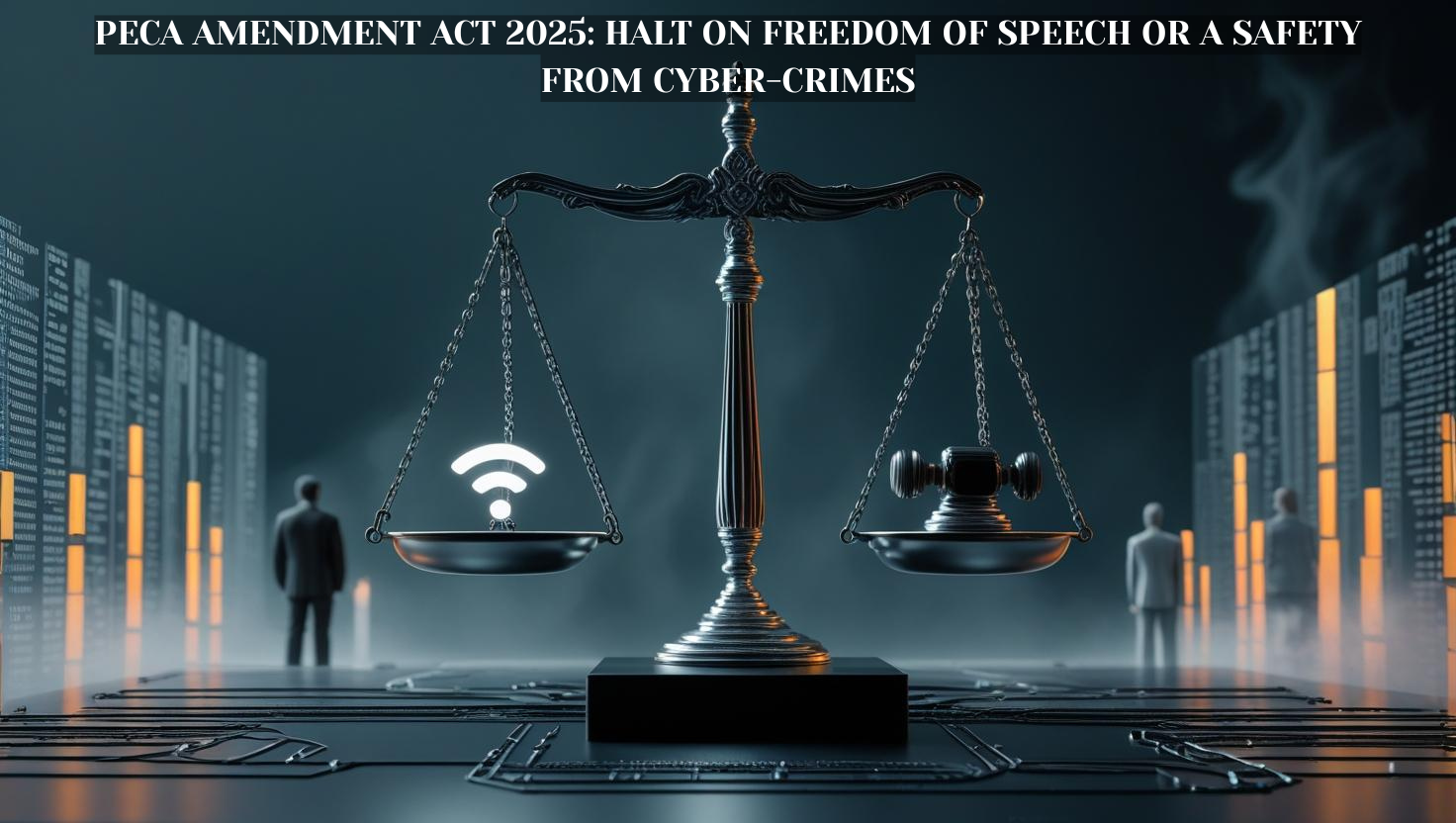
PECA AMENDMENT ACT 2025: HALT ON FREEDOM OF SPEECH OR A SAFETY FROM CYBER-CRIMES
INTRODUCTION
Cyber laws are sine qua non for 21st century but, not at the cost of throttling the free speech and freedom of expression. since the advent of cyberspace and technological advancement in virtual world, digital delinquency has also created severe enigmas. Such as data theft, harassments, blackmailing’s, cyberterrorism, hate speech, unauthorized information system access, electronic fraud, data breaches and myriad other crimes had no check and balances. so in order to regulate the internet all the countries who have sufficient number of internet users enacted rules and regulates to monitor the virtual world.
similarly, PECA Act was also a preventive measure taken by the government Pakistan to ensure cyber security and prevent from digital crimes. But as per the journalist, civil society and opposite fraction of the parliament it’s end and means where to silence the dissenting voice of the society by throttling their freedom of expression, and speech.
Nonetheless, this article will explore all the paramount amendments happened in the PECA amendment Act 2025, moreover, it will present all the observations presented by the national and international organizations claiming it as a catastrophe for the freedoms ensured in the constitution of Pakistan. significantly, this writeup will critically analyze all the aspects of the amendment, evaluate the distending narratives and skim through the legal aspects of the new amendment.
TIMELINE & OF PECA ACT & AMENDMENTS
Prevention of electronic crime act was a ground in national action plan which was formulated in the aftermath of Peshawar school attack and the officially enacted in 2016. moreover, it was further amendment in 2023 and in last the latest follow through happened with the PECA amendment act 2025, which further included and expanded the scope and applicability of the act and established many new authorities to regulate cyber crimes.
In December 2014, the horrific and horrendous attack on the Army public school, brutally killing 144 students, instigated a nation action plan to up-root the menace of terrorism, including cyber-terrorism. A 20-points national action plan was formulated to curb-out terrorism, extremism and virtual malfeasance. it was later approved by the parliament on 24th of December. Additionally, from those 20 points, few were explicitly, indicating the formulation of PECA.
Moreover, in between 2015 and 2016, special review committee meetings, myriad drafts, and revisions of the bills were tabled in the national assembly, by ministry of law and justice, along with the ministry of IT & Telecommunication. finally on 16 of April the standing committee of national assembly on IT approved the bill to to presented in the national assembly.
But it was confronted with widespread criticism, from civic society and many of the member of standing committee who were not shared the draft of the bill, and that made that approval controversial. but, latterly, in July 2016 it was approved by the senate unanimously. And on 11th of August 2016 the prevention from electronic crimes act was passed by the national assembly of Pakistan. Finally, The bill was assented by the president of Pakistan, than president Mamnoon Hussain and the Act came into force immediately upon the presidential assent on 18th of August. but still, it was commonly perceived that the act was passed very hastily.
furthermore, many suggestion were given in between 2017 to 2022- in the term of Pakistan Tahreek-e-Insaaf, but no any new development had happened. but, after the ouster of Imran khan, new coalition government was form and that regime in 2023, amended many sections of the PECA as punishments and fines were increased in many crimes. despite that, few definitions were amended at that time.
On top of that, on 22 January 2025 The Law Minister Azam Nazir Tarar introduced the PECA Amendment Bill 2025 in the National Assembly. It was passed with great speed, in a single day, in face of bitter opposition by the other MPs and by the civil society agencies, who protested the absence of debate and consultation. in the similar fashion, on January 28, Senate passed the bill, despite outcry of journalists, media houses and opposition parties across the country because the bill they claimed would further curtail online freedom of speech and that the bills can be utilized to quash dissidence.
in last, on January 29, President Asif Ali Zardari granted his assent which made the Prevention of Electronic Crimes (Amendment) Act, 2025 the law of the land. The Prevention of Electronic Crimes (Amendment) Act, 2025, was formulated under a state of political panic over the problem of fake news and internet voice, after several years of being condemned because of the non-application of the original PECA. The proposals of the 2025 amendments were proposed and enacted at a high pace, and with limited consultation and have been heavily criticized due to the increased state controls of digital expression and lessened freedoms on speech
WHY IT SEEMS A DEMOCLES OVER FREEDOM OF EXPRESSION?
The Prevention of Electronic Crimes Act (PECA) was eventually passed in 2016. PECA was positioned as a guard against internet exploitation although it aimed to penalize an expansive array of online crimes such as cyberterrorism, hate speech, unauthorized information system access, electronic fraud and data breaches. Yet, even at the first glance, human rights groups, legal scholars, the press, and digital rights advocates expressed alarm over the use of such broadly-worded Act, with vague definitions and possibilities of abuse.
The critics further opined that PECA was not only a law that aimed at tackling cybercriminals but also granted the state immense authority to monitor, censor, and punish dissenting opinions in the guise of safeguarding national security and tranquility of the populace.
An impressive number of journalists have faced the charges of the PECA, mostly related to criticism of government institutions or officials on social networks or in publications. As an example, on march 20, the Farhan Mallick owner of YouTube channel outlet, ‘Raftaar‘ was booked under PECA for allegedly “anti-state” content and data theft through a call Centre and by 2019, at least 23 journalists were targeted by the law. Journalists were often summoned or even issued a notice by the Federal Investigation Agency (FIA), empowered under PECA, often on perceived posts on social media that contain vague or unfounded charges of propaganda of false or defamatory information.
Defamation in the internet entered the criminalization arena in the form of Section 20 of PECA, and was allegedly misused to suppress free voices regardless of the constitutional and judicial protection to freedom of expression and the consequences of unconstitutionality, given by Pakistan courts to the validity of PECA. Citizens worked in political parties or otherwise criticized the government policies were also prosecuted under conditions of PECA, as the spreaders of the so-called fake news or submitted false information, which was supposed to endanger the order of the population or the security of states.
It was through the law that opposition figures and those opposed to the rule were intimidated using, in most occasions, arbitrary arrests and lengthy investigations. PECA threatened the civil society organizations, human rights activists and scholars by harassing and challenging them legally and preventing them to operate freely without voicing concerns. many national and international media reacted on PECA amendment Act as given below;
- Amnesty international warned that “The amendment introduces a criminal offence against those perpetrating so-called ‘false and fake information’ and imposes a maximum penalty of three years’ imprisonment with a fine. The vague and ambiguous framing of some elements of the offense together with a history of the PECA being used to silence dissent raises concerns that this new offence will chill what little is left of the right to online expression in the country”. Babu Ram Pant, the deputy regional director of campaigns for Amnesty’s South Asia chapter.
- human rights commission of Pakistan cautioned In a statement on 25 January 2025, the Human Rights Commission of Pakistan (HRCP) strongly criticized the enactment of the PECA Amendment Bill 2025 which, it said, portends to turn into an instrument to muzzle political rivals, media members, and human rights activists. It lamented that Section 26-A has a broad definition of a fake news and one that carries a harsh sentence of up to three years in prison.
- Still, HRCP was concerned with the establishment of four new regulatory digital agencies, the weakened judiciary by means of executive-dominated tribunals, and the overall suppression of the freedom of expression. The Commission wanted the Senate to debate freely then move on to the next step.
- human rights watch, noted that, inclusion of section 26A, of false news and fake information is not defined by the amendment but uses “vague and overboard language” to illustrate it subjectively, such as the information that could cause, “fear, panic, unrest and disorder”. moreover, by setting a side the civil society and public sector from consultation and genuine scrutiny is severe violation of fundamental rights.
- the Amendment Act is also challenged in the Sindh, Baluchistan and in The Supreme Court of Pakistan, by various journalists, and civil society members on the alleged charges that is “extremely repugnant to the human rights, fundamental rights and freedom of expression and speech“. the petitioner prayed that it should be declared unconstitutional and court should strike it down after the judicial review. likewise, the president of Karachi union of journalists approach the Sindh high court and assert that “this act is an attack on freedom of speech and expression as well as freedom of the press and the same was enacted in violation of Article 19″.
- similarly, Senior analyst Mazhar Abbas declared “Peca law is akin to martial law,”. moreover, the person who drafted 18th amendment of the constitution of Pakistan, sanitor Raza Rabbani of PPP, quoted, “Digital freedom is already over-regulated and now it will be crushed,” he said. “I still remember the blank columns in newspapers during martial law censorship. That was the suppression of the press in the past. And now we have this. But the right to information and freedom of speech is a fundamental right,”
PIVOTAL ATTRIBUTES OF PECA AMENDMENT ACT 2025
Introduced New Offence: Prohibits dissemination of information described as false or fake and which can lead to panic or disturbances as a criminal act. Punishable more than 3 years of imprisonment and /or or Rs 2 million fine. The language is ambiguous, and may be easily interpreted and abused.
- 26A: Punishment for false and fake information.—Whoever intentionally disseminates, publicly exhibits, or transmits any information through any information system,, that he knows or has reason to believe to be false or fake and likely to cause or create a sense of fear, panic or disorder or unrest in general public or society shall be punished with imprisonment which may extend up to three years or with fine which may extend to two million rupees or with both.
Increase of Scope: It has become a crime to make speeches against the state officials/institution (judiciary, army, parliament). Introduces the term aspersion i.e. reputation damage by false statements. Amendment to PECA in 2025 extends the reach of penalty on online expression to a great extent. Significantly, it treats the right to speech against public officials and state institutions (its judiciary, armed forces, parliament and provincial assemblies) as criminal offence, codified for the first time. This is by inserting Section 2R(h) that renders as unlawful the content that is found to contain:
“aspersions against any person including members of Judiciary; Armed Forces, Majlis-e-Shoora (Parliament) or a Provincial Assembly.”
Earlier, this kind of speech had been dealt with extralegally proscribed by PECA without a direct statutory ground. In 2025, these constraints are now legally fixed as the amendments now criminalise the criticism of state bodies despite these bodies, according to the precepts of democracy, being subject to the critical eye (and word). The HRCP has cited this change as specifically threatening to the freedom of expression because it breaks the internationally accepted provision that holders of public office have to put upon themselves a greater measure of criticism than would be tolerated by them outside of office holding roles and in their personal life.
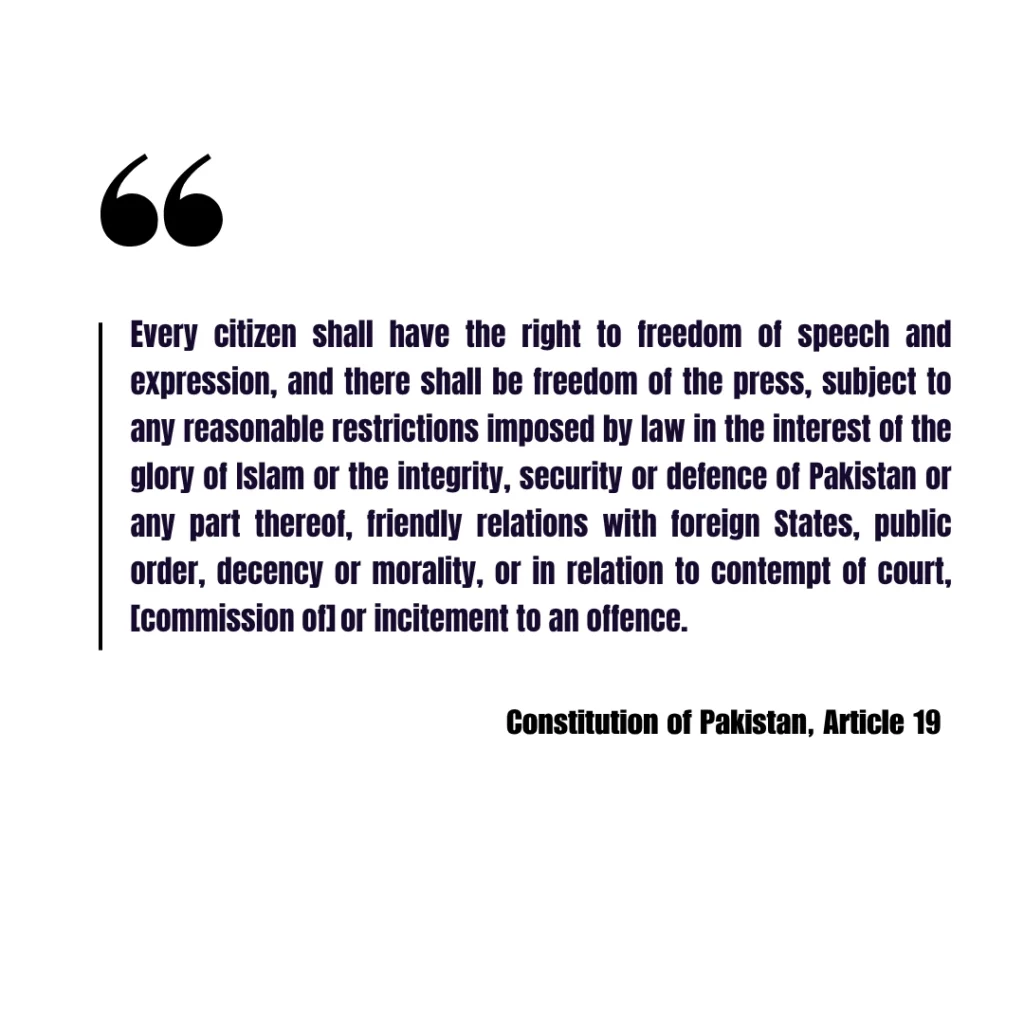
This extension is against the 19th Article of the Constitution which ensures the freedom of speech with the few exceptions which are morality, public order or integrity of Pakistan. Section 2R(h), however, is much beyond these limits, as it receives criminalization of the simple reputational criticism of institutions. To the HRCP this essentially jeopardizes the discourse of democracy as such in a scenario where the state institutions tend to have excessive control over the collective life of the society.
Under the international standard of law, including at the UN Human Rights Committee, the public figures are obliged to accept higher levels of scrutiny as against the non-public persons. The aspersions and institutions in PECA goes contrary to this standard and sets a culture of licensed state overreach that poses even greater threat to civil liberties.
Establishment of Fresh Authorities
Social Media Protection and Regulatory Authority (SMRA)
The SMRA is the centerpiece of the 2025 amendment’s regulatory overhaul. Established under Section 2A of Chapter 1A, this Authority has been invested with massive powers to monitor, block and control online traffic, which cannot be considered as lawful. In contrast to the previous arrangement, which had the functions performed by the Pakistan Telecommunication Authority (PTA) in Section 37 of PECA 2016, SMRA centralizes the powers in the new executive-led regime.
The HRCP is concerned about the fact that there are no statutory definitions used that refer to such terms as unlawful, offensive, and aspersion, which gives the Authority a wide discretionary power to and control the discourse in the Internet. The Authority is also authorized to give a 24-hour notice to remove or block content once a complaint is received, which is of procedural concern in regard to due process and content-neutrality.
The composition of SMRA is alarming. It consists of a chairperson and eight members who include ex-officio members of the Interior Ministry, PTA and PEMRA. Despite the post of lawyer, journalist, software engineer and social media professional, the decision-making devolves upon a chairperson and former off ex officio government official. The executive branch effectively has a majority power because a quorum consists of 5 members comprising of the chairperson and 2 ex-officio members. The chairperson has exclusive powers over human resource and administration and can delegate powers unilaterally. These arrangements undermine the concept of an independent and pluralistic regulatory body and resembles the murky culture of decision making that appears in PEMRA and the now-defunct Inter-Ministerial Committee.
Social Media Complaint Council:
The Act under Section 2T provides the Social Media Complaint Council to hear complaints and process complaints of individuals as well as organizations and the populace about online contents. Though the Council might appear to be a public recourse mechanism, it is fully through federal appointments; and the Additional Secretary of the Ministry of IT being an ex-officio member. Similar to the SMRA, the Council is lacking structural independence, as it is liable to executive influence, especially as there are no measures put in place to guarantee transparency in appointments, tenure security, or complaint processing standards. This imposition of centralized powers without an independent check and balance may result in dishing out favours and elimination of the voice of dissent
Social Media Protection tribunal:
Appeals against decisions of the SMRA. Section 2V creates new judicial authorities which are referred to as the Social Media Protection Tribunals. Every tribunal has a chairman that is to be a high court- qualified, a journalist and a software expert. Nonetheless, these tribunals have their judicial independence questioned since all of their appointments including that of the chairman are done by the federal government. The HRCP observes that any appeal to a decision of the tribunal is directly to the Supreme Court without passing the judgment through the High Courts. This limits justice and increases the cost of legal action and complexity of legal action hence deterring the common litigants to appeal against unjust decision.
Recruitment of Social Media Sites
Section 2Q requires the signing up of all social media with the SMRA. The term social media platform is defined in such a way that any group in WhatsApp, owner of the blog, YouTuber, and virtually anyone who handles web content could be considered a social media platform. The Authority may create unspecified requirements under which enlistment can occur and impair or suspend those platforms which are unable to adhere to them. This leaves grave doubts about arbitrary censorship, surveillance and the choking of minority and opposition views, especially in the light of the misuse of such defensive mechanisms by the PECA 2016.
The National Cyber Crime Investigation Agency (NCCIA).
NCCIA has augmented authority and conducts inquiries, investigations and prosecutions. With its reports in itself considered admissible in court – possibly posing a due process issue, they are empowered to perform a forensic analysis. it is a Substitution of Investigation Agency FIA. Section 29 asserts that the FIA’s Cyber Crime Wing will replaced with a new establishment, NCCIA, in 2025. Investigation and prosecution of offences under PECA are the sole domains of the NCCIA.
The NCCIA officers have the same powers as the police officers in the Cr.P.C. In addition, the NCCIA has the jurisdiction to perform its own forensic investigation and its findings as well are automatically acceptable in the court. This presents a direct threat to neutral forensic standards, because the agency put in the investigation is the arbiter of its own evidence, which weakens the provisions of a fair trial under Article 10-A of Constitution.
Withdrawal of police performance:
The amendment made in 2023 has comprised police to file FIRs of PECA. Amendment 2025 eliminates the police and leaves the investigative authority with NCCIA. All PECA cases registered with the police after 2025 are all ultra vires (beyond legal authority).
Procedural Changes:
Most crimes (including S.20 defamation) became non-bailable and cognizable making the offense cognizable to the state, which has greater arresting powers. In the past, it was possible to file complaints only if a person felt aggrieved. State officials and third parties can do it now. Additionally, the definition of the term person has been expanded to include corporate entities thereby enabling institution to become victims of speech.
SINE QUA NON FOR CYBER-LAWS TO REGULATE THE PROLIFERATION OF DIGITAL CRIMINALITY
In the 21 st century, the main medium of communication, trade, activism and protest is digital. Along with this escalating trend came the certain increase of digital crime: hate speech, misinformation, identity theft, cyberstalking, financial fraud, and digital defamation. Therefore, the presence of a viable cybercrime legislation is a sine qua non-it is something without which the fidelity of cyber infrastructure and the confidence of the people in the online systems are not maintainable.
Nevertheless, while there is need of regulation to fight real beds in the digital spaces. most importantly, the use of cyber laws is subject to their relevancy to constitutional protection and international human rights. It is this balancing that the HRCP presents in the critique of the PECA (Amendment) Act 2025.
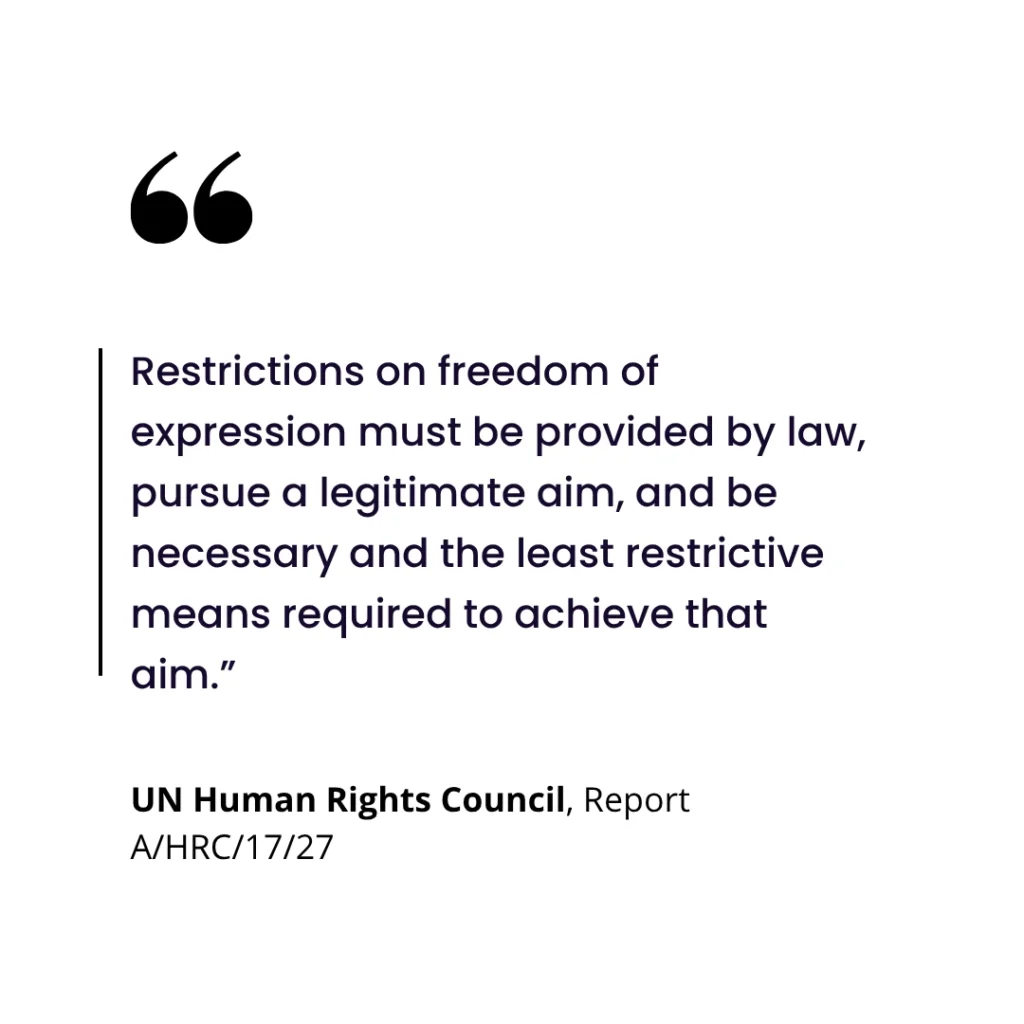
Additionally, In Res. 20/8 (2012), the United Nations Human Rights Council (UNHRC) clearly established that, the freedom of expression as well as privacy is of the same protection online as it is on real life. Likewise, in its report on the subject, the UN Special Rapporteur on Freedom of Expression (Frank La Rue, 2011 report), expressed the concern that the criminalisation of online expression on grounds of national security or regulation cannot be carried out without being necessary and proportionate to a legitimate end.
Thus, cyber laws would have to be balanced and they would have to protect all people against any damage caused by digital criminality, but at the same time should not intervene with freedom of expression (Article 19 of the ICCPR) and with the right to privacy (Article 17 of the ICCPR).
Therefore, the key aspect in ensuring both protection of the digital space and democratic principles is a well-written cyber law. In the age of the threat of cybercrime that endangers the personal security of individuals, the stability of the economy, and the overall confidence of people, the regulation cannot be an optional feature anymore, it must be done. Nevertheless, these kinds of laws should be well-understood, proportionate, rights-based and (ideally) monitored independently. This is because only in this case they will fulfil their actual purpose to protect citizens against digital evil, and do not prevent proper expression or isolate authoritarianism in the name of ordinary citizens.
A very detailed and comprehensive Article